What is SASMI?
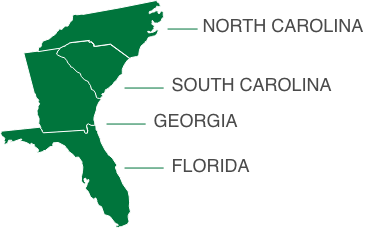
The South Atlantic Salt Marsh Initiative (SASMI) is a regional effort and voluntary, non-regulatory partnership that brings together leaders from the Southeast Regional Partnership for Planning and Sustainability (SERPPAS), The Pew Charitable Trusts, and other local, state and federal partners, communities and nongovernmental organizations to determine the greatest threats to the salt marsh ecosystem and opportunities to ensure its survival in the four-state region from North Carolina through Brevard County in east-central Florida. This coalition effort officially launched in May 2021, and since then has brought together over 450 partners across the region.

SASMI’s goal is to enhance the long-term abundance, health and resilience of the approximately 1 million acres of salt marshes within the South Atlantic states to ensure no overall loss of the benefits these wetlands provide to fish, wildlife and people. SASMI’s pathway to the protection, restoration and migration of this great expanse of salt marsh is the SASMI Plan.
Mission
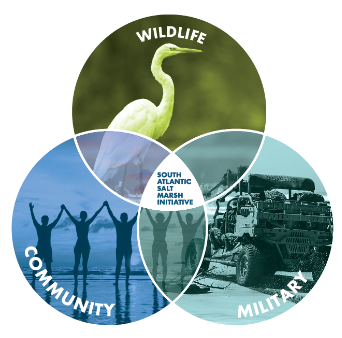
SASMI's mission is to bring together partners and stakeholders to develop and implement the SASMI Plan to the benefit of people, communities, military installations, and fish and wildlife that depend on South Atlantic salt marshes.
MARSH FORWARD: State Roadmaps are Here!
Developed through local, state, and federal collaboration by the State Implementation Teams (SITs), the roadmaps identify and prioritize the objectives, actions, areas, pathways, and partners necessary to implement the regional SASMI plan at the state level.
View the roadmaps for each SASMI state here, and learn more about this effort in this web story by The Pew Charitable Trusts.
SASMI Region
SASMI Overview Film
This short film introduces the South Atlantic Salt Marsh Initiative and explains the importance of our mission to protect and restore salt marsh. Produced by the Cornell Lab of Ornithology
News

After 2 years of work, volunteers near completion of the longest living shoreline in SC
9/29/26
It’s been two years since the first volunteer squished out into the pluff mud near the Marine Corps Air Station Beaufort. Now, The Nature Conservancy, in collaboration with the installation, SC DNR, and a host of volunteers, is close to completing the longest living shoreline of its kind in South Carolina.
Visit the SASMI News Archive
Built to Last: Resilient Road-Stream Crossings for People, Fish, and Wildlife
9/26/26
This newly published report was developed by the Environmental Policy Innovation Center, ARC Solutions, and Wildlands Network, with support from The Pew Charitable Trusts. It highlights how aging culverts and bridges can be upgraded using integrated road-stream crossing designs that improve resilience to changing weather conditions while benefiting aquatic and terrestrial wildlife.
Visit the SASMI News Archive
Investing in Water and Nature to Build Climate Resilience
9/15/26
As part of its Environment Program, the Walton Family Foundation is launching the Water and Nature Fund to advance solutions that work with nature to protect rivers, oceans and the communities that depend on them. The Water and Nature Fund will invest in innovative projects that use the power of nature to advance solutions addressing the significant water challenges we face.
Visit the SASMI News Archive
$4.1 Million Awarded for Research to Inform Coastal Flooding Resilience and Adaptation
9/15/26
NOAA’s National Centers for Coastal Ocean Science (NCCOS) Effects of Sea Level Rise (ESLR) Program is announcing $3.1M for new and continuing competitive research awards that will help federal, state, and local officials better manage flood events and make sound decisions leading to safer coastal communities and healthier coastal environments.
Visit the SASMI News Archive
New Signs at Isle of Palms Marina Highlight Salt Marsh and Tidal Waterways
9/9/26
Earlier this year, the City of Isle of Palms Environmental Advisory Committee (IOP EAC) completed an installation of 14 nature signs at the Isle of Palms Marina that are focused on the ecosystems of the salt marsh and tidal waterways.
Visit the SASMI News Archive
Improving the selection of salt marsh mapping methods for shoreline change analysis
9/2/26
This paper quantifies multiple sources of error across various methods available to practitioners and evaluates their effects on final shoreline movement rate estimates.
Visit the SASMI News Archive